PREFABRICATED STAIRCASE AND LANDINGS

Thumbnail 1
previous arrowprevious arrow
next arrownext arrow
Thumbnail 1
Thumbnail 2
Thumbnail 3
Thumbnail 4
Thumbnail 5
Thumbnail 6
Thumbnail 7
Thumbnail 8
Thumbnail 9
Thumbnail 10
previous arrow
next arrow

Prefabricated staircases are an effective and economical solution for the rapid construction of staircases in residential buildings, civil and industrial buildings. Thanks to the high precision of production and quick assembly, there is a significant saving of time and labor on the construction site. We supply stair elements as stair arms, platforms or complete assemblies, taking the shape, dimensions and details are always adapted to a specific project.

We are able to design and manufacture practically any type of staircase – from straight shoulders, through curved staircases with landings to curvilinear ones (spins) solution.


Materials and construction

  • Reinforced concrete slab parts rectangular shape with integrated degrees and, as needed, with landings.

  • Concrete: typical C30/37 (according to project requirements / statics).

  • Reinforcement: according to the static design for a specific load case.

  • Surface finish: smooth mold impression (suitable as a base for paint, PVC, paving or stone); can be added upon request anti-slip element.

  • Preparation for railings and installation: the possibility of incorporating anchoring elements for railings, possibly preparations for electrical installation.


Design variants

Straight stairs:

  • with upper and lower landing

  • with upper or lower landing

  • without platform

Crooked / space stairs:

  • shape L or U (left-handed / clockwise)

  • stairs composed of floor or mezzanine landings and arms

  • the possibility of folding several arms next to each other (according to space availability)

Curvilinear / spiral staircase:

  • solutions for compact spaces or architecturally demanding projects (as specified)


Dimensions and parameters

The dimensions are always designed according to the project documentation - they are typically adjusted:

  • step width and height, plate thickness, shoulder width

  • platform length, number of degrees

  • fire resistance, attractiveness, readiness for final tiling

Thanks to this variability, the staircase can be very well adapted to the specific spatial conditions of the building.


Use

  • apartment buildings, family houses

  • civil and public buildings (schools, administration, sports facilities)

  • industrial and warehouse halls

  • indoor and outdoor stairs (according to surfaces and details)

Implementation and assembly

  • Installation is in progress by crane for ready storage according to assembly instructions / project documentation.

  • The staircase can be placed on a prefabricated structure or connected to a monolith.

  • After settling there is an element fully bearable and the staircase can be immediately used to access higher floors (increasing the safety and smoothness of construction).

  • Installation can be coordinated at the same time as fitting ceilings or balconies.


Certification and quality

  • Production takes place in a controlled quality process.

  • Shape design, reinforcement and storage details are carried out according to the project documentation and the statics of the specific building.

  • Fire resistance requirements can be addressed upon request, anti-slip, visual design and integrated elements for railings.

Martin Belohlav

Sales representative

South Bohemian,Highlands,Pardubice,Zlínský
Moravian-Silesian,South Moravian,Olomouc

Pavel Heřmanský

Sales representative

South Bohemian,Central Bohemia,Královehradecky
Pilsen,Prague,Liberecký,Karlovy Vary

FULL AND SANDWICH WALLS BASIC BEAMS

Thumbnail 1
previous arrowprevious arrow
next arrownext arrow
Thumbnail 1
Thumbnail 2
Thumbnail 3
Thumbnail 4
Thumbnail 5
Thumbnail 6
Thumbnail 7
Thumbnail 8
Thumbnail 9
Thumbnail 10
previous arrow
next arrow

Solid and sandwich walls as well as foundation beams are prefabricated reinforced concrete elements designed for fast and accurate construction of ground structures in civil, residential, industrial and agricultural construction. Wall units can be designed as full reinforced concrete (bearing / not wearable) or as three-layer sandwich walls (carrier layer + heat insulation + outer protective layer). The foundation beams serve as horizontal load-bearing elements, which transfer the load to the substructure and form a stable foundation for the structural system of the building.


Materials and construction

Solid reinforced concrete walls:

  • Monolithic nature of the prefab, high load capacity, stiffness and durability
  • Suitable for covering halls, stiffening walls, dividers, fireproof / anti-dust walls, etc.

Sandwich walls:

  • Three-layer composition: carrier layer + heat insulation + protective (facade) layer
  • The layers are interconnected stainless steel special clips/anchors (minimization of thermal bridges, long life)
  • Isolation: ordinary EPS or XPS according to project requirements

Foundation beams / thresholds:

  • Bearing horizontal elements for skeleton structures, often as plain beams between footings/piles
  • Depending on the project, they can also be with a sandwich solution (e.g. thermal partition at peripheral parts)

Dimensions and parameters (approximately according to the project)

  • Foundation beams: length up to approx 18 m, width up to 60 cm, height up to 120 cm

  • Wall panels: length usually up to approx 10 m (according to transport and assembly), thickness according to design, height by floor (approximately up to 3,3 m)

  • Production is mostly atypical – shape, thickness, reinforcement, openings and details are designed individually according to statics and drawing documentation.


Implementation and assembly

  • Assembly of parts is in progress by crane on the prepared structure (basics, feet, ceiling construction).

  • Wall anchoring is usually solved using anchor plates, which after fitting each other boils, possibly other system elements according to the project.

  • For beams/sills, anchoring is possible, e.g. already contact pins, anchor plates, possibly using system anchoring elements.

  • Can be integrated into elements penetrations, installation box, embedded elements, locksmith products and special anchors / mounting elements (e.g. HTU, HTA as needed).


Use:

Wall panels:

  • Cladding of halls and industrial buildings

  • Stiffening skeleton walls, dividing and fire walls

  • Basement walls, technological and operational objects

  • Rapid construction of residential and civil buildings (bearing and non-bearing walls)

Foundation beams / thresholds:

  • Load transfer between footings/piles

  • Supporting structure for perimeter skins and internal stiffening walls

  • Protective / anti-impact elements in operational and storage halls

  • Peripheral elements of the structure with the possibility of thermal separation


Certification and quality

Design of shape and reinforcement is always solved static calculation for a specific project

Production in a controlled quality system 9001:2015 and according to the relevant ČSN/EN for prefabricated concrete parts

Martin Belohlav

Sales representative

South Bohemian,Highlands,Pardubice,Zlínský
Moravian-Silesian,South Moravian,Olomouc

Pavel Heřmanský

Sales representative

South Bohemian,Central Bohemia,Královehradecky
Pilsen,Prague,Liberecký,Karlovy Vary

DOUBLE CONNECTED WALLS HWE

Thumbnail 1
previous arrowprevious arrow
next arrownext arrow
Thumbnail 1
Thumbnail 2
Thumbnail 3
Thumbnail 4
Thumbnail 5
Thumbnail 6
Thumbnail 7
Thumbnail 8
Thumbnail 9
Thumbnail 10
previous arrow
next arrow

Double bonded walls HWE represent a higher degree of use of FILIGRAN-type reinforced concrete constructions. The wall unit consists of two thin reinforced concrete slabs (usually 50–60 mm), which form double-sided lost formwork. Their relative position is fixed spatial lattice beams and a space is left inside for solidification with concrete.
The parts are already included they also carry the distribution reinforcement on both cheeks. After concreting, a structure with properties will be created monolithic walls, with high rigidity and reliable transmission of vertical and horizontal loads (ground pressure, wind etc.).


Materials and construction

Concrete prefabrication: C25/30 to C35/45 (according to the project)
Steel / reinforcement: rod 10 505 (R), BSt 500, KARI network (W) – according to the static design
Truss beams:
They ensure the coupling of both plates for handling and assembly
They transfer the horizontal forces from the fresh concrete during solidification
They increase the rigidity of the part in the assembly stage

Possibility of penetrations and installation of installations: windows, door, passages, electric boxes etc.


Dimensions and parameters

Max. dimension of the part (according to production and transport): up to approx 3,5 m × 12,0 m
Height: according to floor height (the outer plate can be higher by the thickness of the ceiling)
The resulting thickness of the finished wall: 200 / 250 / 300 / 350 mm
Weight: in the most common embodiment 2 × 60 mm cca 300 kg/m²
Lengths and shapes: optional depending on the project, including corner pieces, bevels and irregular floor plans


Implementation and assembly

The parts are installed with a crane on the prepared structure (base plate / lower floor ceiling) do cement mortar beds.
In the vertical position, the walls are secured inclined struts (anchoring to the substrate and the part) for fixation and protection against tipping.
It is inserted into vertical and horizontal joints connecting fitting for the mutual interaction of the components in the structure.
In case of a requirement for waterproofing, it is supplemented swelling sealing tape.
It can be placed in the space between the slabs before concreting divorces (electro, ZTI) and prepare passes.
Solidification is most often done with concrete C16/20 (B20) and concreting is underway layer by layer according to the technological procedure.
It is possible in combination with FILIGRAN ceiling boards monolithing of walls and ceiling at the same time, which brings significant rigidity to the entire structure.


Use

Residential, civil and industrial construction
Basement and underground floor (infrastructure)
Buildings in gaps – the possibility of fitting close to the neighboring building
Velevator shafts, shops, collectors
P
above ground tanks, technological chambers
Retaining and corner walls and earth pressure transmitting structures


Advantages of the system

Quick assembly with minimal carpentry requirements, concrete and reinforcement work
Smooth surfaces on both sides – often without the need for plastering
High dimensional accuracy and shape variability, openings and penetrations
Preservation of the properties of the monolithic construction - reducing the risk of cracks in the joints
Installation possible even at low temperatures (according to construction technology)


Certification and quality

Design of shape and reinforcement is always solved static calculation for a specific project

Production in a controlled quality system 9001:2015 and according to the relevant ČSN/EN for prefabricated concrete parts

Martin Belohlav

Sales representative

South Bohemian,Highlands,Pardubice,Zlínský
Moravian-Silesian,South Moravian,Olomouc

Pavel Heřmanský

Sales representative

South Bohemian,Central Bohemia,Královehradecky
Pilsen,Prague,Liberecký,Karlovy Vary

Filigran jointed ceiling boards

Thumbnail 1
previous arrowprevious arrow
next arrownext arrow
Thumbnail 1
Thumbnail 2
Thumbnail 3
Thumbnail 4
Thumbnail 5
Thumbnail 6
Thumbnail 7
Thumbnail 8
Thumbnail 9
Thumbnail 10
previous arrow
next arrow

Spliced ​​ceiling boards FILIGREE are thin prefabricated reinforced concrete slabs (usually thick. 60 mm), which serve as lost formwork for connected ceiling structures. It is already built into the prefab lower supporting and distribution reinforcement according to static calculation. They are part of the plates spatial trusses, which ensure the coupling of the prefabricated and monolithic part in the final state and at the same time increase the rigidity and load-bearing capacity in the assembly stage (they are also used during manipulation).
The total thickness of the ceiling is always given by the static design as the sum of the thickness of the filigree plate and overcast concrete.

Materials and construction

Concrete: C25/30 to C35/45 (according to the requirements of the project and static design)
Steel / reinforcement: rod 10 505 (R), BSt 500 / B500, KARI network (W) and others by design
Truss beams: ensure coupling, stability during assembly and transfer of forces after solidification
Possibility of penetrations and installations: the concrete overlay allows easy routing of distributions and the creation of openings

Dimensions and parameters

The thickness of the prefab: usually 50–70 mm (most common 60 mm
Length: economically to 7,0 m (When cured up to 9.0m, according to the design and type of solution)
Width: economic 2,39 m (production line width), normally as needed; max. according to the project (e.g. up to approx. 3.2–3.5 m)
Weight: at thickness. 60 mm cca 150 kg/m²

Implementation and assembly

It must be installed before assembly mounting supports (handstands + beams); their spacing is usually cca 1,5–2,0 m according to the thickness of the ceiling and the design of the supporting structure.
Placing plates: usually on masonry ~75 mm, on the through-holes usually 20–50 mm (according to the detail).
Bed joint in the case of masonry constructions, it is plastered with cement mortar or fine-grained concrete (cca 10–15 mm).
After the plates are installed, the reinforcement in contact is added, at supports and perimeter reinforcement, is subsequently executed overcast concrete according to the project documentation.
Before concreting, overcast concrete can be stored in the area electrical installation, penetrations and other distributions

Use

Ceiling and roof construction in residential, civil, administrative and industrial construction
Regular floor plans, "hidden" dies for flat soffit
An advantageous solution in combination with double filigree walls (monolithization = higher rigidity of the structure)

Advantages of the system

Extremely fast assembly and significant savings in formwork
Smooth soffit (minimal need for further adjustments)
High variability shapes, openings and easy installation of installations in the concrete overlay
Preservation of properties monolithic ceiling (reducing the risk of cracks in the joints)

Certification and quality

Production Quality Certification - Production in accordance with the quality management system ČSN in ISO 9001

Martin Belohlav

Sales representative

South Bohemian,Highlands,Pardubice,Zlínský
Moravian-Silesian,South Moravian,Olomouc

Pavel Heřmanský

Sales representative

South Bohemian,Central Bohemia,Královehradecky
Pilsen,Prague,Liberecký,Karlovy Vary

Prefabricated cellars of modulo

isometria-modulo-beton
previous arrowprevious arrow
next arrownext arrow
isometria-modulo-beton
Decheterie-Pardie-1
Decheterie-Pardie-2
Decheterie-Pardie-4
Modulo_web_fiaala3
modulo_web_fiala7
1444880859
aerial_view_modulo_bristol-1-e1582653488710
IMG_6628
p1320905
previous arrow
next arrow

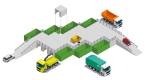
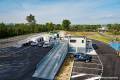
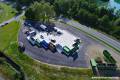
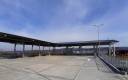
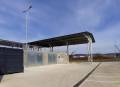
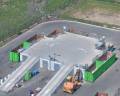
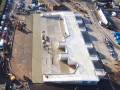
System MODULO is a prefabricated solution for the realization of underground buildings - typically serving as a waste storage, technology or other service space. Is based on a combination reinforced concrete modules, that are mounted in fully functional technical spaces with minimal construction preparation. Module is ideal for example for Waste container systems (HWRC), Because it allows full use of land above the structure and at the same time ensures hidden, Safe and accessible space below ground level.

 100 % usable area at the top, 100 % space inside - 200% land use.

Materials and construction:

  • Walls and ceilings of concrete C35/45 According to ČSN EN 206-1 with B500B structural reinforcement.

  • Integrated ceilings with walkable adjustment or vehicle load options - according to the specification to 29 t total weight (by default 3,5 t).

  • High resistance to chemical stress and pressure water.

  • Possibility to customize shape and division including multiple rooms or extensions.

  • Waterproofing is part of the technology in module joints.

Implementation and assembly:

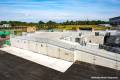
  • Modulo objects are mounted from prefabricated parts directly on the construction site.

  • Standard assembly time 1 object (without access ramps) is about 2-3 days.

  • Including ramps and backfilling the terrain take the implementation commonly 3 until 5 working days.

  • Delivery includes modular units, slab, Puts for technology and service approach.

Use of a system:

  • Collection yards and sorted waste centers:
    Hidden, safe storage of dangerous or separated materials.
  • Underground technical spaces of towns and municipalities:
    E.g. for pumps, meters, transformer station or cleaning warehouses.
  • Supply of public spaces:
    For underground parking of parks, furnishings or techniques.
  • Commercial and industrial zones:
    Technical and service space under the parking lot or areas

Certification and quality:

  • Production and design according to standards ČSN EN 206 A in 1992-1-1.

  • Stress variants until 29 again (e.g. truck travel).

  • Long life, high water resistance, chemicals and mechanical load.

  • The system verified by long -term operation in Western Europe.

The official holder of the modulo system for the Czech Republic is Maba Prefa.

This system is the ideal solution for a wide range of applications, Where is the key strength, reliability and speed of construction.

Catalog - MODULO

Martin Belohlav

Sales representative

South Bohemian,Highlands,Pardubice,Zlínský
Moravian-Silesian,South Moravian,Olomouc

Pavel Heřmanský

Sales representative

South Bohemian,Central Bohemia,Královehradecky
Pilsen,Prague,Liberecký,Karlovy Vary